2026 Best Construction Banner Types for Global Buyers
Construction projects communicate in changing conditions: dust clouds, hard sunlight, rain, and busy roadsides. The right Construction Banner helps people find a site, understand a message, or recognize a project from a distance. Yet no single banner type suits every job. A material that performs well on a sheltered fence may struggle when exposed to strong wind or repeated handling.
This guide compares common options for global buyers, including vinyl, mesh, and fabric banners. It considers print clarity, tear resistance, weight, finishing, and practical details such as eyelet spacing and mounting edges. Mesh can allow airflow through exposed fencing, while solid vinyl often provides stronger color coverage. Fabric may fold and transport easily, but its suitability depends on weather exposure and installation. Details matter.
Buyers should also check the expected display period, local climate, viewing distance, and shipping requirements before choosing a specification. A banner may look impressive in a product photo but arrive with dimensions or finishing that do not suit the site. That happens. Ask suppliers for material specifications, clear proofs, and samples when possible; verify how they test and describe durability. This is not always easy across markets, and supplier language can vary. The following overview offers a practical starting point, not a universal ranking. It helps procurement teams compare banner types with real project conditions in mind, then request the details needed for a more reliable decision.
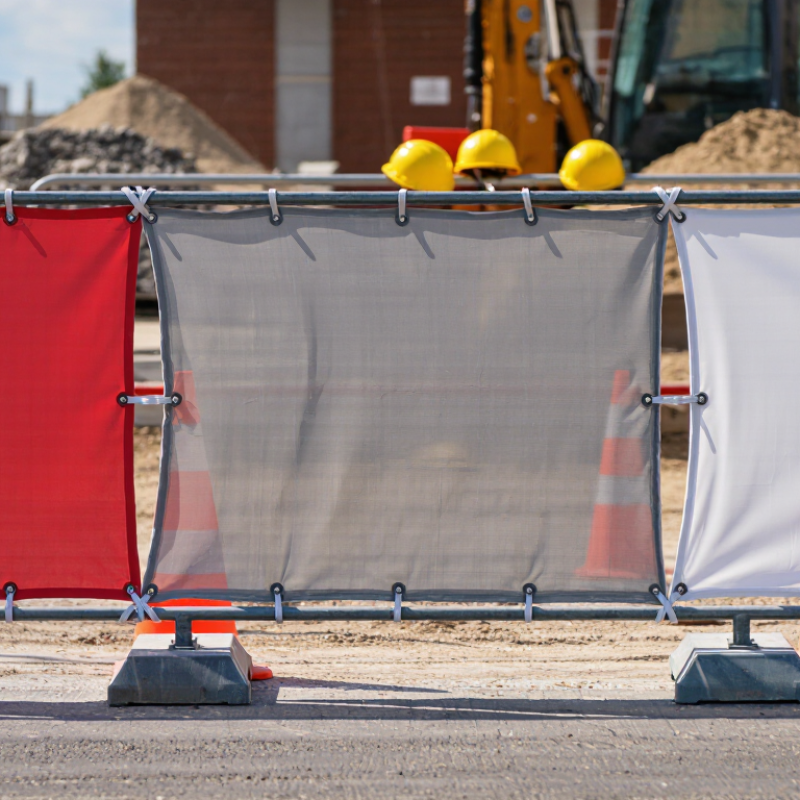
Construction Banner Types: PVC, Mesh, Fabric, and Reusable Systems
Construction banners face dust, wind, sunlight, and repeated handling. PVC banners remain practical for solid fencing and short-term walls. Their coated surface produces strong color and resists light rain. However, heavy PVC can trap wind and increase fixing pressure.
Mesh banners use perforations to reduce wind load. They suit scaffolding, open fences, and high-rise renovation zones. The compromise is visible: images may look softer from a distance. Fabric banners feel lighter and fold easily. They often create less glare under site lighting, but they need careful tensioning and drying before storage. FESPA’s Print Census 2023 reported that 57% of surveyed printers expected sales growth, supporting continued demand for adaptable large-format graphics.
Reusable systems deserve closer attention from global buyers. Modular frames, replaceable skins, and standardized hardware can reduce waste across phased projects. Smithers’ report, The Future of Global Printed Signage to 2028, highlights digital production and sustainability as major forces shaping signage decisions. A reusable frame may cost more initially. Yet repeated campaigns can lower replacement and shipping costs. I have seen buyers overlook storage space. That mistake matters. Wet fabric packed into a case can develop odor and damage. PVC can also crease permanently when folded too tightly. Material selection should follow wind exposure, viewing distance, installation duration, and local recycling access. No option wins every site.
PVC Banner Specifications: Common 440–510 gsm Weight Range
For global buyers planning 2026 construction campaigns, PVC banners remain a practical choice for fences, scaffolding, and site entrances. The common specification is 440–510 gsm, meaning grams per square meter. A 440 gsm banner is lighter and easier to install on temporary structures. A 510 gsm option feels denser and usually offers better resistance to wind and repeated handling. Weight matters, but it does not tell the whole story.
From project inspections, I have learned that coating quality can matter more than a small weight difference. Buyers should check the polyester scrim, PVC coating thickness, tear strength, and surface finish. A banner may reach 510 gsm yet still perform poorly if the coating bonds unevenly. Ask for a production tolerance, not only a target number. This detail is often missed.
Request a physical sample before approving a large order. Bend the material, inspect the edges, and test several eyelets by hand. Reinforced hems reduce stress around fixing points. For long outdoor use, confirm resistance to rain, ultraviolet exposure, and temperature changes. Local safety rules may also affect printing materials and installation methods. Requirements differ by country. Do not assume one specification fits every site.
The 440–510 gsm range is useful, but selection should follow the project environment. A sheltered fence may not need the heaviest fabric. An exposed high-rise site probably needs stronger reinforcement and secure spacing. I once underestimated wind exposure on a seemingly protected location. The banner survived, but the fixing plan needed revision.
Mesh Banners: 30–40% Open Area for Wind Permeability
For global construction buyers, mesh banners are a practical choice for exposed fences and scaffold frames. Their 30–40% open area lets wind pass through the printed surface. This can reduce pressure on supporting structures. Air moves through. That matters on coastal sites, tower renovations, and temporary perimeter fencing. Field checks often compare the stated openness with real fabric samples. A banner may look breathable, yet dense ink coverage can slightly reduce airflow. Substrate quality, seam design, eyelet spacing, and frame position also affect performance. Do not judge the material by appearance alone.
A well-specified mesh banner should include dimensions, fabric weight, open-area percentage, finishing details, and fixing intervals. Request a sample before ordering large quantities. Hold it toward daylight. Check whether the holes remain clear after printing. For tall scaffold wraps, closer attachment points usually control movement better than oversized eyelets. However, stronger fixing cannot replace a qualified structural review. Wind direction, corners, gaps, and nearby buildings can create uneven loads. The 30–40% range is useful, but it is not a universal safety guarantee. I have seen suitable mesh fail because of weak ropes or poor tensioning. That is the uncomfortable lesson. Reliable results require matching the banner, attachment system, and site conditions. Check everything again after severe weather.
Fire-Safety Ratings: EN 13501-1 Classification for Project Sites
For global construction buyers, fire performance should guide banner selection, not only price or print quality. EN 13501-1 classifies construction products by reaction to fire. Classes range from A1 and A2, with limited contribution, to F, with no verified performance. Smoke levels use s1 to s3, while burning droplets use d0 to d2. These details matter near temporary offices, scaffold routes, and enclosed work areas.
A banner’s rating applies to the tested product system. Fabric, coating, stitching, eyelets, and installation can change performance. Request the original classification report, test method, product thickness, and production batch information.
EN 13823 and EN ISO 11925-2 are common test references. The European Commission’s Construction Products Regulation framework supports this classification approach. NFPA’s Fire Loss in the United States During 2023 reported about 1.39 million fires and USD 22.2 billion in property damage.
That figure is not specific to banners, but it shows why temporary materials deserve careful review. A label alone can mislead.
Tips: Match the banner class to the project specification and local authority requirements. Check whether the certificate covers outdoor exposure and the complete installed assembly. Keep test documents with site records. Do not assume “fire-retardant” means EN 13501-1 compliant. I would also inspect damaged edges after installation, because real sites are rougher than laboratories. Some buyers overlook this practical weakness.
Global Buyer Checks: ASTM D751 Tests, UV Exposure, and Installation Needs
2026 Best Construction Banner Types for Global Buyers
For global buyers, banner selection starts with ASTM D751 testing, not color or price. ASTM D751 evaluates coated fabrics through tests such as breaking strength, tear resistance, adhesion, and hydrostatic resistance. These results show how a banner may perform during handling and outdoor use. Request the test method, specimen direction, and reported units. A number without testing conditions can mislead.
UV exposure deserves equal attention. A banner installed on open scaffolding may face intense sunlight, heat, rain, and repeated temperature changes. Ask for accelerated weathering data and the expected service period. Check whether fading, coating cracks, or edge damage were recorded. Laboratory exposure cannot perfectly copy every climate. That limitation matters. A pale surface may still be structurally sound, while a bright surface may hide brittle fabric.
Installation needs often decide the actual banner type. Measure wind exposure, mounting spacing, edge reinforcement, and fixing points before ordering. Frequent grommets can reduce stress when positioned correctly. Solid banners suit many short-term walls, while mesh constructions may reduce wind pressure on exposed structures. Confirm scaffold compatibility, fire requirements, local loading rules, and safe access procedures. Allow enough hem strength for tensioning. Too much tension can distort the print or tear the edge. A perfect specification can still fail through rushed installation. Field checks remain necessary, especially after strong wind or heavy rain.