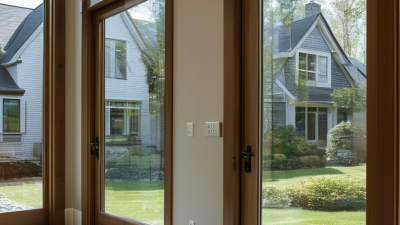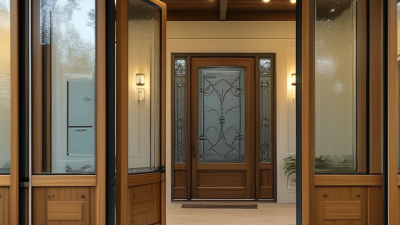
Choosing among the best door installers for global buyers requires more than comparing installation prices. Quality depends on climate, building standards, product compatibility, and after-sales support. A coastal entrance faces salt air, strong wind, and driving rain. A high-rise apartment requires different anchoring and fire-safety documentation.
Industry data shows why this decision deserves careful research. The International Energy Agency reports that buildings account for around 30% of global energy demand. Poorly sealed doors can increase drafts, moisture problems, and heating or cooling costs. The U.S. Department of Energy also identifies doors as part of the building envelope, where correct sealing and installation influence energy performance. These findings support a practical point: even an expensive door can perform badly when fitted carelessly.
This guide evaluates door installers through measurable evidence. Relevant indicators include trained technicians, documented project experience, warranty clarity, installation tolerances, and independent customer feedback. EN 14351-1, ASTM standards, and local building requirements may apply, depending on the destination market. Buyers should request product certificates, method statements, and photographs of completed work. Small details matter, such as a continuous seal around the frame or a level threshold that does not collect water.
The data is not perfect. Market reports often combine manufacturers, distributors, and installers, making direct comparisons difficult. That limitation deserves attention. Therefore, our selection approach balances published industry research with practical installation evidence, regional capability, and transparent communication. The strongest provider is not always the cheapest. It is the installer that can explain every step, document the work, and respond when conditions change.
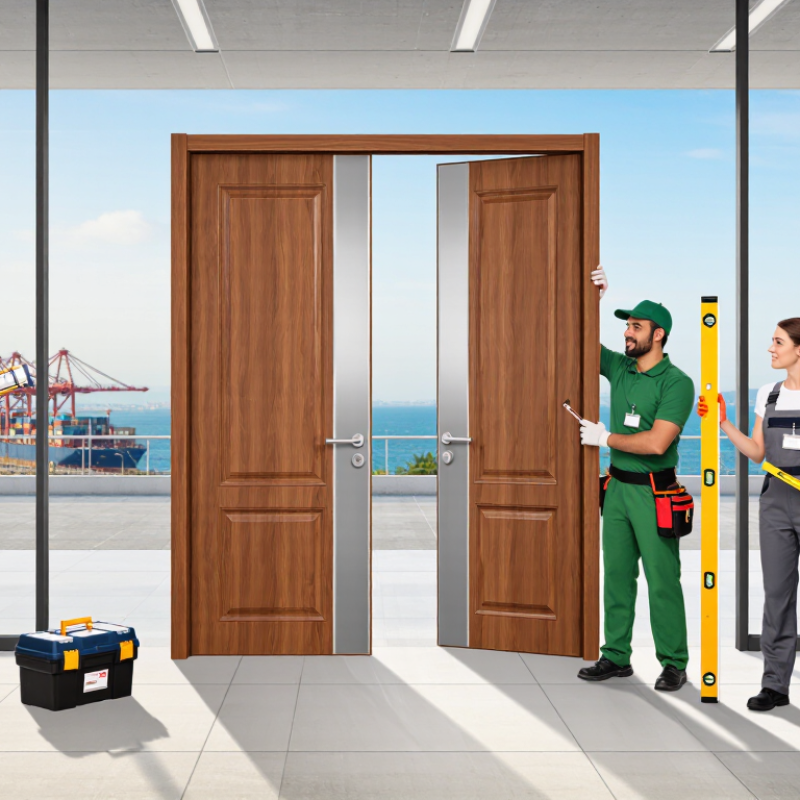
The 2026 global door installer market is shaped by renovation, energy efficiency, and faster urban development. Installation quality now matters as much as door design. Fortune Business Insights’ Global Doors Market report estimates roughly 4.9% annual growth through 2032. This expansion increases demand for trained installers across residential, commercial, and public projects.
Energy performance is becoming a practical buying criterion. The International Energy Agency reports that buildings consume about 30% of global final energy. Poorly sealed doors can create visible drafts, moisture marks, and higher heating costs. Experienced installers should check wall conditions, frame alignment, threshold levels, and air leakage. Small errors become expensive later.
Digital tools also influence global procurement. Installers increasingly use laser levels, thermal cameras, and digital handover records. These details help buyers compare workmanship across countries. However, reports often measure door sales, not installation quality. That gap deserves caution. A low quoted price may exclude removal, structural adjustments, transport damage checks, or local compliance reviews. Buyers should request project photos, written tolerances, warranty terms, and references from similar climates. Ask difficult questions. Good installers will answer clearly.
Urban population share is a useful demand-context indicator for international door installation services. Higher urbanization can support stronger renovation, replacement, commercial construction, and multi-unit housing activity, although it is not a direct measure of installer revenue or market size.
Data source: United Nations Department of Economic and Social Affairs, World Urbanization Prospects 2024. Regional values are rounded estimates for 2024.
Global buyers should evaluate door installers beyond attractive quotations. A reliable installer begins with a documented site survey. It should record wall thickness, opening dimensions, drainage, wind exposure, humidity, and local fire requirements. Ask for test reports covering air leakage, water penetration, thermal performance, and forced-entry resistance. ISO 9001 certification can support process control, but it does not prove installation quality. Review project references in climates similar to yours.
Energy performance deserves close attention. The International Energy Agency’s 2023 Global Status Report for Buildings and Construction states that buildings use about 30% of global final energy and create roughly 26% of energy-related emissions. Therefore, installers should explain frame materials, glazing options, seals, thermal breaks, and verified U-values. Request drawings, product data sheets, inspection records, and maintenance instructions in English. Small omissions become expensive across borders.
Logistics matter too. The World Bank’s 2023 Logistics Performance Index assessed 139 economies through customs, infrastructure, shipment tracking, and delivery reliability. An experienced installer should provide packaging standards, container-loading photos, Incoterm responsibilities, damage procedures, and a realistic replacement timeline. Confirm who handles measurements, customs documents, local permits, and final adjustment. A low price can hide weak coordination. I would still inspect every completed opening personally when possible. No checklist catches every warped frame, uneven substrate, or rushed sealant joint. That uncomfortable limitation deserves honest planning.
For global buyers, door installer categories matter more than attractive catalogs. Residential installers handle apartment entries, villas, and replacement projects. Commercial installers serve offices, hotels, hospitals, and retail spaces. Industrial installers manage heavier doors, loading areas, and controlled-access zones. Fire-rated and accessibility specialists require stricter documentation, testing, and site coordination. Some contractors claim broad expertise, but breadth can hide weak experience.
Energy performance deserves attention. The International Energy Agency reports that buildings consume about 30% of global final energy. The 2023 Global Status Report for Buildings and Construction also links buildings to roughly 37% of global energy and process-related emissions. Experienced installers should therefore explain frame alignment, air leakage, thermal bridging, glazing compatibility, and local climate exposure. Ask for measured installation tolerances, not vague promises. Small gaps matter.
Retrofit installers are often practical for global buyers. They can adapt existing openings, preserve surrounding finishes, and reduce shipping or demolition waste. New-construction installers may offer better coordination with architects and structural teams. Security-door specialists can address forced-entry resistance, while automatic-door technicians focus on sensors, controls, and maintenance access. Documentation is essential: product certificates, installation records, warranty limits, and service response times should be clear in writing. I would not select the cheapest quote. Still, premium pricing does not guarantee competence. A useful test is simple: request photos of comparable projects, installation method statements, and a realistic explanation of what could go wrong.
A practical comparison of installer categories, service capabilities, project suitability, and typical international buying considerations.
| Installer Category | Best for Global Buyers | Common Door Types | Typical Project Scope | Indicative Installation Time | Key Qualifications to Verify | Main Buyer Consideration |
|---|---|---|---|---|---|---|
| Residential Door Installers | Homeowners, landlords, residential developers, and overseas property buyers | Entry doors Interior doors Patio doors French doors | Single-home replacements, apartment renovations, new-build housing, and small residential developments | Approximately 2–8 hours per door, depending on frame condition and finish requirements | Local trade licensing, liability insurance, manufacturer installation guidance, and references for comparable homes | Accurate surveying and protection against water, air, and security problems |
| Commercial Door Installers | Offices, retail premises, hotels, schools, healthcare buildings, and mixed-use developments | Aluminium doors Glass doors Steel doors Entrance systems | Multi-door fit-outs, entrance upgrades, tenant improvements, and scheduled refurbishment projects | Usually 1–3 working days for a small project; larger fit-outs are phased around building operations | Commercial project experience, method statements, site safety procedures, and documented testing | Coordination with other trades, access control, opening dimensions, and handover documentation |
| Fire-Rated Door Specialists | Projects requiring regulated fire-resistance performance or compartmentation upgrades | Steel fire doors Timber fire doors Smoke-control doors | Fire-door replacement, corridor upgrades, stairwell protection, plant rooms, and compliance remediation | Approximately 4–10 hours per opening, including hardware fitting and inspection | Relevant local fire-code knowledge, approved door-set procedures, certified hardware, and inspection records | The complete door assembly must be compatible; the slab alone does not establish fire performance |
| Security and Access-Control Installers | Commercial buildings, apartment blocks, warehouses, data facilities, and high-security premises | Security doors Intercom doors Electronic locks Turnstile systems | Door replacement combined with card readers, electronic locking, intercoms, sensors, and monitoring systems | One day for a basic opening; complex integrated systems may require several planned site visits | Electrical competency, access-control integration experience, cybersecurity procedures, and commissioning records | Compatibility between locks, power supplies, software, emergency release, and local safety rules |
| Automatic Door Installers | Retail, transport facilities, hospitals, supermarkets, public buildings, and accessible entrances | Sliding doors Swing doors Revolving doors Low-energy operators | New automatic entrances, operator retrofits, sensor replacement, safety testing, and maintenance contracts | Approximately 1–2 days for a standard entrance, subject to electrical and structural readiness | Automatic-door safety training, electrical qualifications where required, risk assessment, and commissioning tests | Pedestrian safety, accessible operation, backup power, sensor coverage, and ongoing maintenance |
| Industrial and Warehouse Door Installers | Factories, distribution centres, logistics hubs, workshops, and agricultural facilities | Roller shutters Sectional doors High-speed doors Dock doors | Large vehicle openings, loading bays, production areas, temperature-controlled zones, and heavy-duty access points | One day for a standard replacement; large or electrically operated systems may take 2–5 working days | Industrial lifting and electrical safety procedures, equipment-specific training, and planned maintenance capability | Opening size, wind exposure, cycle frequency, impact protection, insulation, and operational downtime |
| Energy-Efficient Door Installers | Cold-climate housing, low-energy buildings, renovation projects, and buyers focused on operating costs | Insulated entry doors Thermally broken doors Low-threshold doors | Replacement of poorly performing doors, thermal upgrades, draught reduction, and airtightness improvements | Approximately 4–8 hours per door, plus time for careful sealing and adjustment | Building-envelope experience, thermal and airtightness awareness, correct sealing practice, and documented product data | Whole-opening performance, not only the advertised insulation value of the door panel |
| Custom and Heritage Door Installers | Historic properties, luxury residences, conservation areas, and projects with non-standard openings | Bespoke timber doors Restored doors Arched doors Decorative doors | Surveying, reproduction, restoration, custom joinery, specialist glazing, and sensitive installation work | One day to several weeks, depending on fabrication, approvals, and on-site adjustment | Joinery or conservation experience, documented material specifications, survey drawings, and approval awareness | Accurate measurement, moisture movement, appearance matching, and permissions for protected properties |
| Public-Sector and Accessibility Specialists | Schools, hospitals, civic buildings, social housing, and public facilities serving diverse users | Accessible entrances Wide doors Anti-ligature doors Tactile hardware | Inclusive-access upgrades, compliant circulation routes, public-building refurbishments, and scheduled maintenance | One day per standard opening; projects are commonly delivered in controlled phases | Knowledge of local accessibility rules, public procurement requirements, safeguarding, and site safety | Clear opening width, threshold height, operating force, signage, visibility, and user safety |
| International Project Installation Teams | Importers, overseas developers, contractors, and buyers shipping doors across borders | Pre-hung door sets Commercial systems Industrial doors Specialty entrances | Remote surveys, installation supervision, local-partner coordination, technical documentation, and multi-site rollouts | Typically scheduled by shipment, site readiness, permits, and local labour availability | Cross-border logistics experience, local code coordination, installation documentation, and warranty procedures | Confirm responsibility for customs, storage, local permits, spare parts, after-sales service, and warranty travel |
Buyer note: Installation times and project suitability are indicative planning ranges rather than quotations. Before appointment, request a written site survey, opening measurements, door-set specifications, applicable local-code references, insurance details, warranty terms, maintenance responsibilities, and a clearly itemised quotation in the destination country’s currency.
Comparing door installers requires more than choosing the lowest quote. Ask for an itemized proposal with door size, material, glazing, hardware, delivery, taxes, removal, and installation. Vague pricing often creates expensive changes later. Check whether the quoted currency is clear. Confirm lead times in writing.
Certifications deserve careful checking. Request current installer licenses, liability insurance, safety training, and product-specific certificates. Verify the issuing organization independently, not through a forwarded image. A credible installer should explain testing for wind, water, air leakage, and thermal performance. Requirements vary by location. Local approval still matters.
Installation quality can decide whether a good door performs well. Ask for a documented site survey covering wall condition, opening dimensions, moisture, and drainage. The crew should use compatible shims, sill protection, flashing, and approved fasteners. Request photos before interior trim hides the work. Clarify who handles damage, cleanup, adjustments, and warranty visits. One practical warning: a perfect-looking quote may omit disposal or difficult access. I have seen small omissions become disputes. Leave room for questions, and challenge any answer that sounds rehearsed. Check references for similar climate and building types, not only recent customer ratings.
For global buyers, choosing a door installer involves more than comparing labor rates. An international contract should identify dimensions, materials, hardware, installation tolerances, and delivery responsibilities. Put everything in writing.
A small drawing can prevent confusion about swing direction or threshold height. The contract should also state currency, payment milestones, inspection rights, and procedures for damaged goods.
I have seen projects delayed because “installation included” did not define site preparation. That phrase needs detail.
Warranty terms deserve equal attention. Ask when coverage begins: shipment, installation, or final acceptance? Confirm coverage for hinges, seals, locks, glass, and finishes.
A reliable installer should provide a written response period for defects. Clarify who pays for labor, replacement parts, and return freight. Keep photos, serial records, and inspection notes. They support a fair claim.
Warranties are not magic. Improper storage, moisture, or unapproved modifications may void coverage.
After-sales support matters when a replacement seal must cross borders. Request a named service contact, spare-part availability, remote troubleshooting, and local technician options.
Test response quality before purchasing by sending practical questions. Fast, specific replies provide useful evidence. Still, online promises can exceed actual service.
Ask for references from comparable international installations. Build a realistic remedy plan, not an optimistic one.
Leave time for customs delays and seasonal transport disruptions. Plan for friction.